-
Yankee Micro Social Psychology Part II

Summary of Part I In Part I of my article, I described how initially the field of social psychology had deep roots in the socio-cultural traditions of Wundt, Royce, Baldwin, Cooley, Thomas and Mead. But by the beginning of World War I a shift towards individualism can be seen in the work first of the […]
-
Yankee Micro Social Psychology Part I

Orientation Developing a Marxist social psychology is a very important aspect of explaining what is going on within the individual in relation to society as well as what is going on in small group interactions between themselves. What we find when we examine social psychology in Yankeedom is what you might suspect, and that is […]
-
Crowds, Masses and Movements

Orientation Why study crowds, masses and movements? It is tempting to imagine that as socialists we must know a great deal about crowds, masses, and in medieval thought individual meant inseparable, that is indivisible. People were defined as individuals by reference to the groups of which they were members. Group membership defined their very identity […]
-
2,315 Charter Schools Failed And Closed In 11 Years

Although they have been around for more than 30 years, and although they are frequently touted as being superior to public schools, the U.S Department of Education reports that between 2010-11 and 2021-22, an 11-year period, 2,315 charter schools failed and closed in the U.S. That is a huge number of school closures in a […]
-
Collectivist, Individualist and Communist Selves Part II

Summary of Part I In Part I of my article, we began by distinguishing the social self from two forms of identity that are often confused with it: temperament and personality. The focus of part one is to show how very social (or even socialist) was the work of social psychologist George Herbert Mead. We […]
-
Collectivist, Individualist and Communist Selves, Part I

Medieval alchemist working in his laboratory Orientation Preliminary social psychology questions and answers People’s identity can be made sense of as existing in the cross-fire between our biological, psychological and social lives. This helps us to understand the differences between someone’s temperament, personality and self. Among social psychologists such as George Herbert Mead, the species […]
-
Rishi Sunak’s AI Pitch: The Bletchley Declaration
British Prime Minister Rishi Sunak looks as much a deep fake projection as a thin, superficial representation of reality. His robotic, risible awkwardness makes a previous occupant of his office, Theresa May, look soppily human in comparison. But at the AI Safety Summit at Bletchley Park, the nervous system of code breaking during the Second […]
-
The Science of Superstition
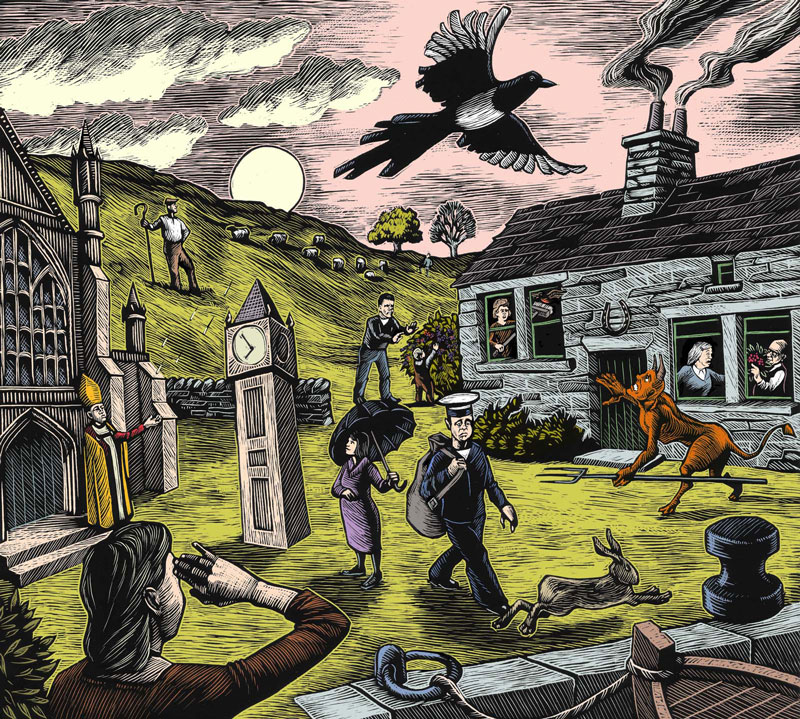
Orientation Examples of Superstitious Behavior Stuart Vyse is a psychologist and the author of one of the books I’ll be referencing called Believing in Magic: The Psychology of Superstition. In that book he used his students as guinea pigs for his research on superstition. Before taking one of his exams Vyse found the following superstitions […]
 English
 Arabic
 Chinese (Simplified)
 Dutch
 French
 German
 Italian
 Portuguese
 Russian
 Spanish