-
Trump’s Whims on Tariffs and Trade Deficits
“Trump’s tariff formula explained: How rates were determined for each country” IMAGE/USA Today/Duck Duck Go Tariffs Tariffs are a tax imposed on imported goods to protect local industries in order to be self-sufficient and thus avoid being taken advantage of. For a very long time, Britain charged tariffs on many items, only in 1860 were […]
-
Why New York City Needs a Public Bank
We will build a city-owned bank — not to serve shareholders, but to serve you. A bank that invests in housing, in transit, in climate resilience. A bank that puts our money to work for our people. — Zohran Mamdani, Victory Speech, Nov. 4, 2025 New York City has elected a mayor who dares to challenge […]
-
Who Was Eugene Debs?

Zohran Mamdani’s quoting of Eugene Debs in his recent victory speech (for mayor of New York City) should awaken interest in the man who gained a name for himself as “Mr. Socialism.” For seventeen years Debs was the Brotherhood of Locomotive Firemen, starving himself of sleep to bone up on politics, economics, and history. With […]
-
Let’s Shift Federal Subsidies to Loans After 1 Year, Starting With Oil/Gas Industry?
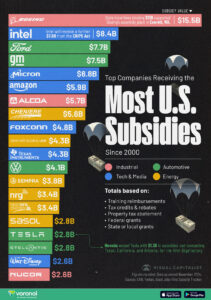
The origin of federal subsidies—to businesses, industries, farmers, national infrastructure—began with our country’s first Congress (1789) approving startup financing that banks and other sources couldn’t or wouldn’t provide. The idea then (and now) was that if these investments were successful, they would trigger other enterprises. Subsequent jobs would follow, feeding consumer spending, and, ultimately, federal […]
-
Things Are Shitty Because We Are Ruled By People Who Want Things To Be Shitty
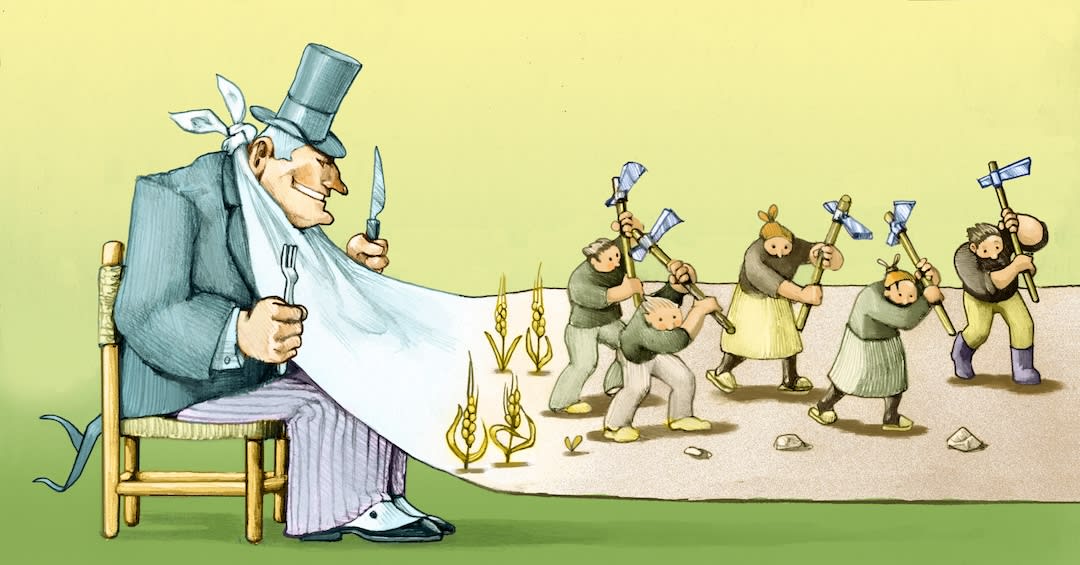
Which sounds more likely: (A) that things are bad because the population keeps organically voting for policies which just so happen to hurt ordinary people while benefitting the rich and powerful, or (B) that things are bad because the rich and powerful want things this way? Does it seem more likely to you that (A) […]
-
The Hidden Cost of Comfort: How Everyday Consumption Fuels Global Violence
In a world increasingly defined by convenience, luxury, and technological advancement, few pause to consider the true cost of their comfort. From the cars we drive to the cell phones we cradle, from the diamonds we gift to the beauty products we apply—modern life is saturated with commodities whose origins are steeped in exploitation, war, […]
-
Profits, Prophets and Overvalued AI Stock I
In an industry of seedy soothsayers, cocksure charlatans and resourceful rogues, honest and accurate appraisals are exquisitely rare. When it comes to economics, investments and finance, this is particularly so. Certitude, however, tends to be in abundance for those predicting the next financial crash, the sort that will singe earnings and strafe savings. Take, for […]
-
Florida “Schools of Hope” Law Intensifies School Privatization
Over the past 33 years privately-operated charter schools have seized billions of dollars in public funds and public property that rightly belong to public schools. This neoliberal parasitism has been achieved mainly through state laws and schemes that legalize and normalize such wealth transfers in the name of “school choice,” “parent empowerment,” “accountability,” “competition,” and […]
-
How a Fed Overhaul Could Eliminate the Federal Debt Crisis, Part II: Curbing Fed Independence
There has been considerable discussion in recent years about reforming, modifying, or even abolishing the Federal Reserve. Proposals range from ending its independence, to integrating its functions into the U.S. Treasury Department, to dismantling it and returning monetary policy to direct congressional or Treasury oversight. The Federal Reserve Board Abolition Act (H.R. 1846 and S. 869, 119th […]
 English
 Arabic
 Chinese (Simplified)
 Dutch
 French
 German
 Italian
 Portuguese
 Russian
 Spanish